
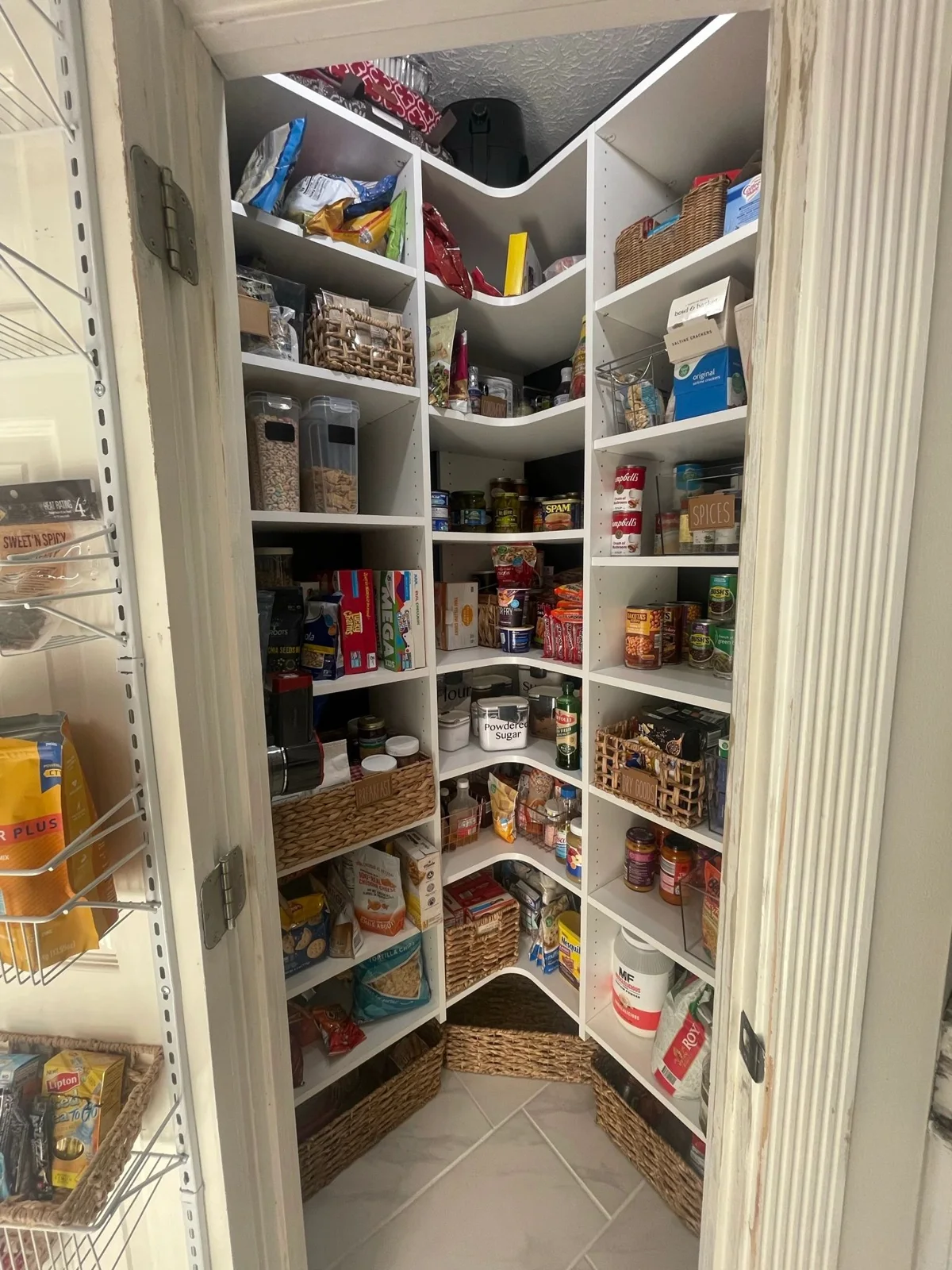
Look at the packaging you actually buy.
Pantry images often show a uniform set of containers. Most households also store cereal boxes, snack bags, canned goods, bulk packages and irregularly shaped supplies. Measure a representative group before deciding what the shelves should hold.
Do not assume all items need the same depth. Small jars, serving pieces and countertop appliances create different requirements. A mix of storage arrangements may be more useful than one repeated shelf dimension.
Distinguish front-row access from backstock.
Everyday ingredients should be easy to see and return. Backup packages can have a separate location so they do not block the active supplies. Without that distinction, the pantry tends to develop layers, and the household buys duplicates because the existing item is hidden.
Try organizing a current shelf into active use and replenishment zones before redesigning it. The experiment can reveal whether the problem is shelf size, category placement or simply too much inventory for the available space.
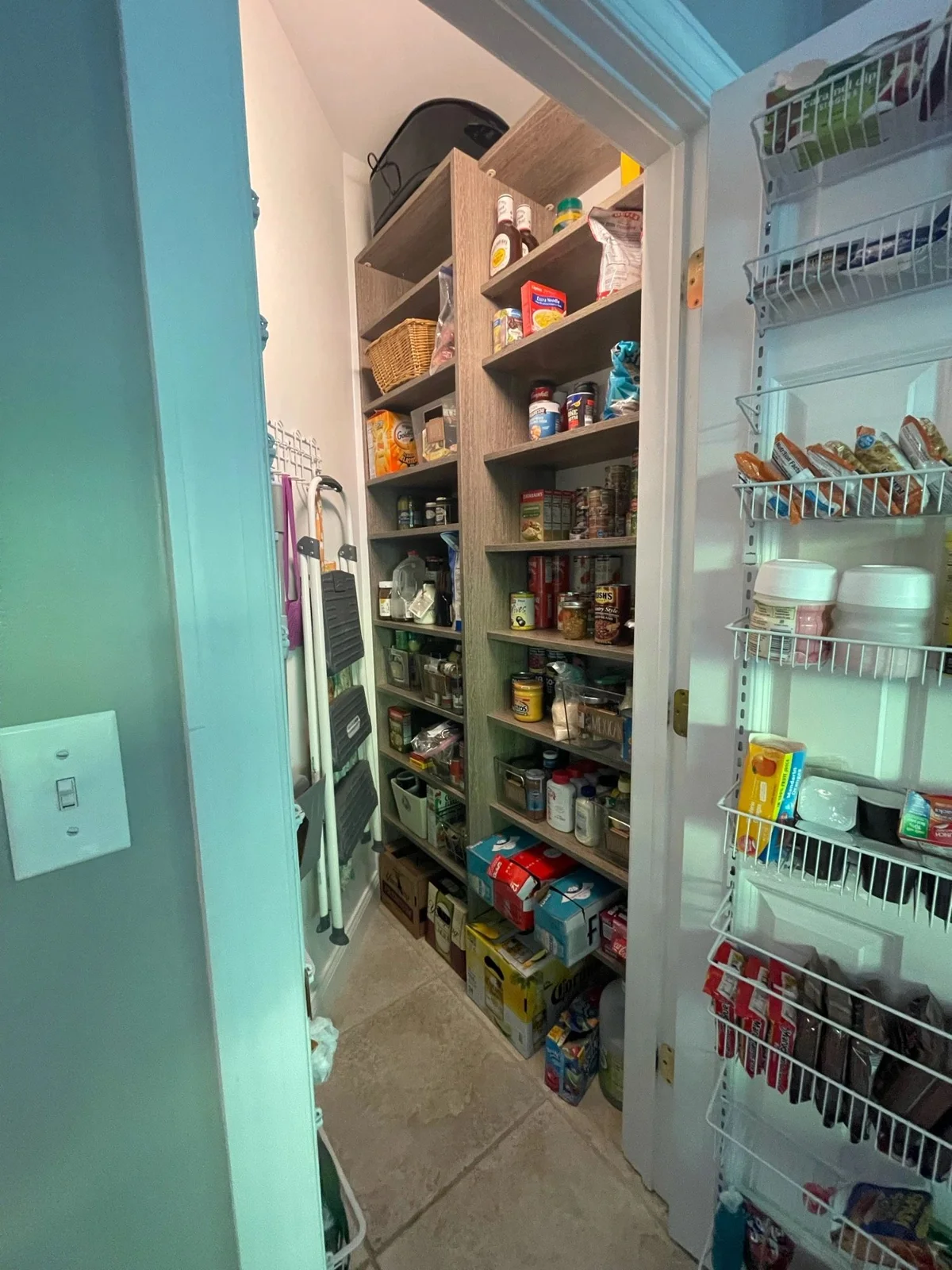
Consider the person using each area.
A family snack section needs to be accessible to its intended users. Heavy items should be placed where they can be handled appropriately. Upper or awkward sections can serve occasional storage when there is a suitable access plan.
The goal is not to use every cubic inch identically. The goal is to give each category a location that makes sense for how frequently and by whom it is used.
Buy containers after the layout is understood.
Bins can group small packages and make a deep area easier to manage, but only if they fit the proposed shelves and remain practical to lift. Matching containers are not a substitute for clear categories.
If decanting food into containers is not part of your routine, design around the original packaging. A system that requires habits you do not want to maintain is unlikely to stay useful.
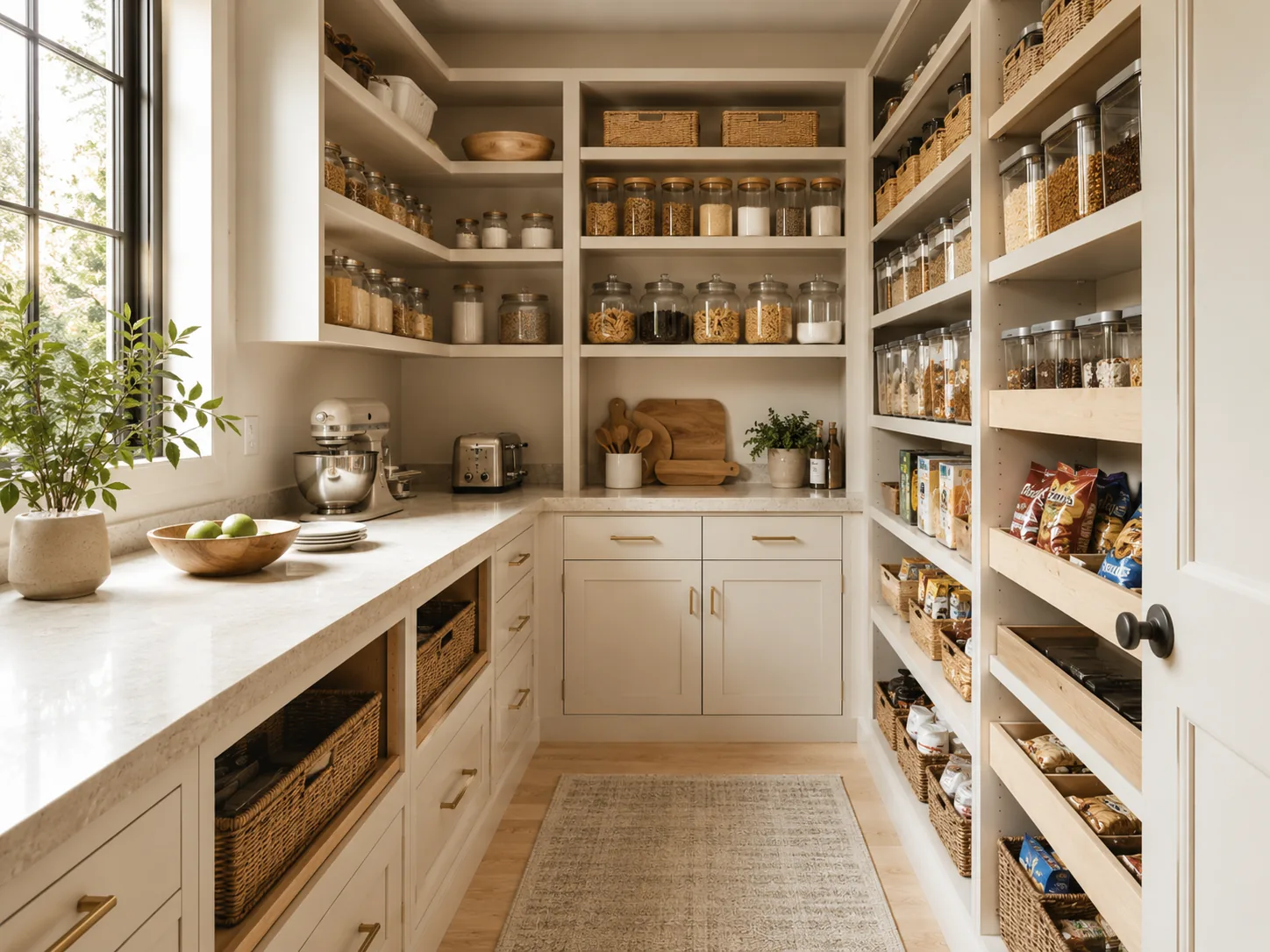
Evaluate the pantry as part of the kitchen.
Think about the route between the pantry, the preparation area and the places where groceries enter the house. Keep frequent cooking supplies where they are easy to retrieve, and reserve occasional storage for items that do not need daily access.
Bring photos of crowded shelves and the largest objects you want to accommodate. Those details are more informative than an empty-room photograph when planning a pantry that works for the way you shop and cook.
Choose Shelf Depth Using the Things You Buy
Line up the packages you regularly purchase on a table: cereal boxes, cans, oil bottles, snack packets and any bulk containers. Measure their footprints and decide which should be stored in a single visible row. The right shelf depth follows those groups; one depth across every wall can waste access or conceal food.
For an appliance, measure more than the body. Include the handle, cord and the movement needed to lift it out. Storing an appliance and operating it inside cabinetry are separate decisions. If it will run in place, its manufacturer’s ventilation and clearance requirements belong in the plan.
Compare the Choices
| Choice or situation | What to consider | What to check |
|---|---|---|
| Daily ingredients | Visible shelves or accessible drawers. | Avoid hiding small packages behind taller ones. |
| Backup stock | A separate replenishment zone. | Keep it distinct from open packages. |
| Small appliances | A shelf sized for the actual equipment. | Check weight, lifting access and operating requirements separately. |
Put This into Practice
- Bring representative package dimensions.
- Try the grouping before buying matching containers.
- Review corners from the doorway and the normal standing position.