

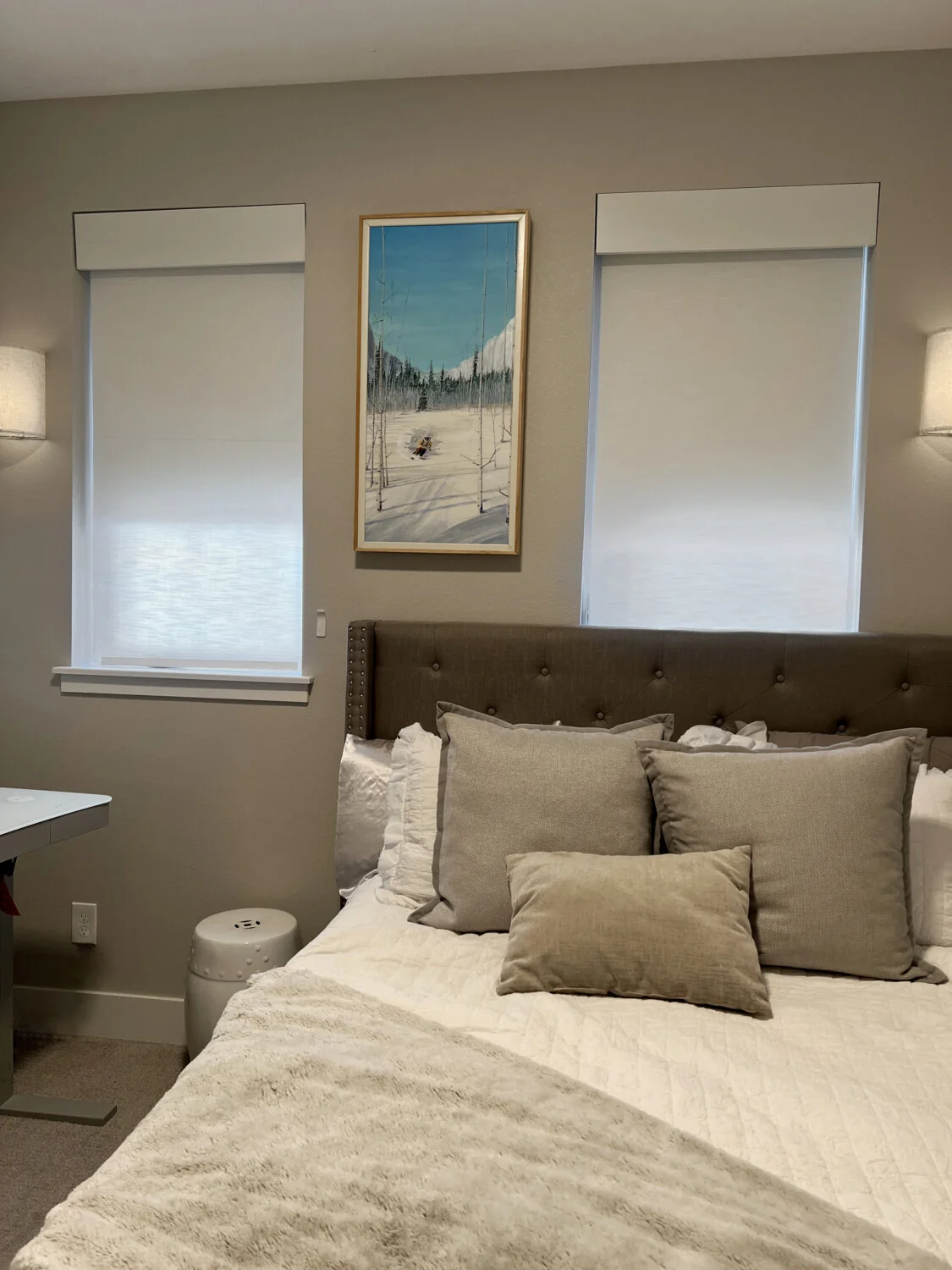
Begin with the lighting conditions.
Privacy changes when the balance of light changes. Think about a living room in full afternoon daylight and the same room after sunset with the lamps on. The view through an open-weave screen is influenced by the fabric and the light on each side. A daytime demonstration alone cannot settle a nighttime privacy question.
Identify where privacy matters most: a bedroom, a dressing area, a street-facing room or a workspace visible from nearby windows. Explain both when the room is used and what you want someone outside to be unable to see.
Separate three different goals.
Glare control, a view outdoors and privacy are related, but they are not interchangeable. You may want to soften light on a screen while keeping a view during the day. At night, you may prefer a more private layer. In a bedroom, reducing incoming light can be another distinct priority.
Write those goals down separately. It becomes much easier to compare fabric directions when the conversation is not reduced to a single word such as “shade.” The selected solution should address the actual use of the room.
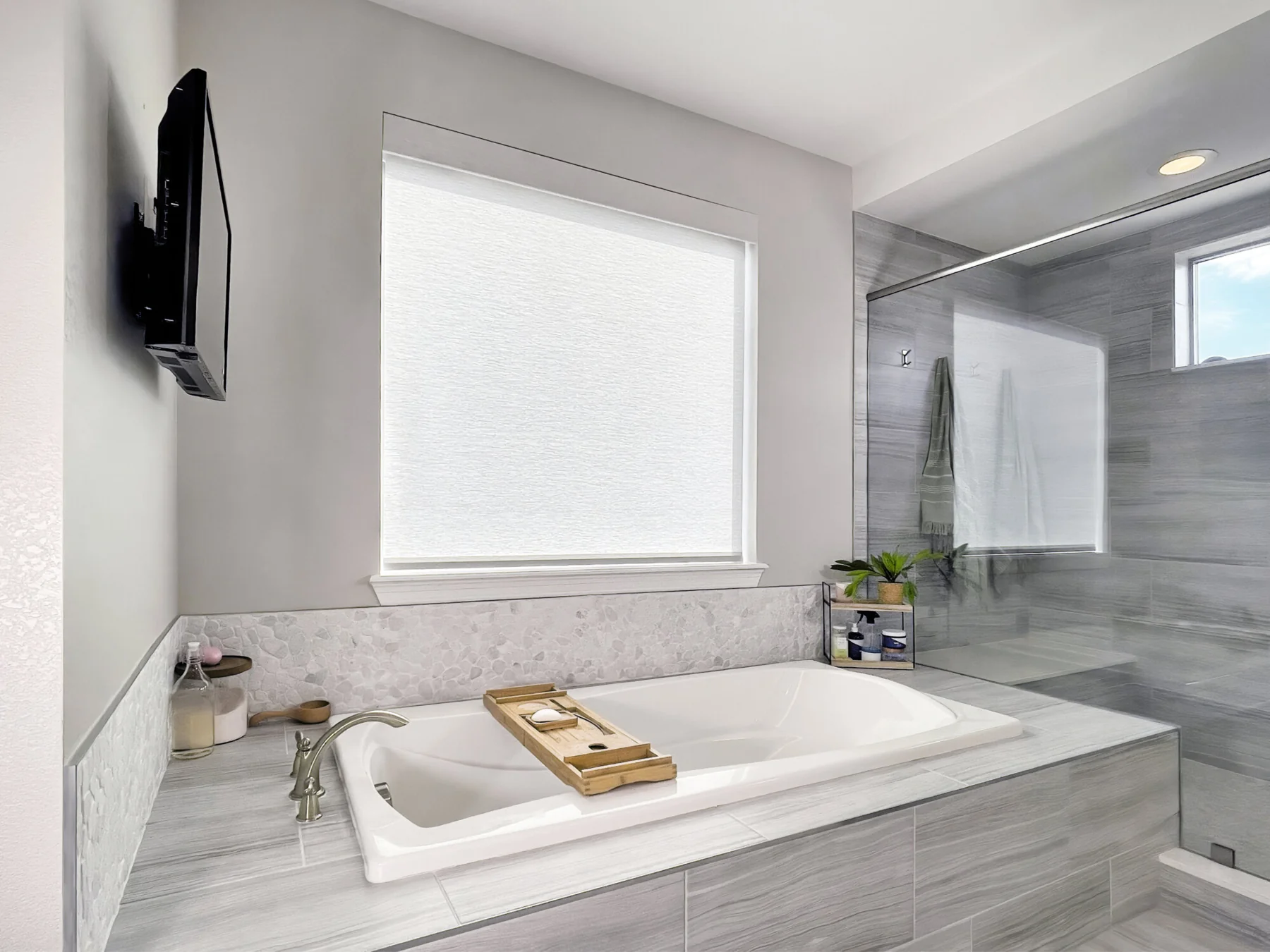
Consider a layered approach.
Insolroll describes dual-shade arrangements that combine solar-screen fabric with a second privacy or blackout shade. That gives the design conversation two fabric functions to work with instead of asking one screen to do everything. The exact arrangement still depends on the opening, mounting space and available system.
A layered solution also needs a practical operating plan. Consider which layer you will use most often, whether both should be motorized and how the hardware will relate to the trim. More layers create more choices, so the simplest suitable arrangement is often worth considering first.
Ask about edges and installation, too.
Fabric is only part of a window treatment. Gaps at the sides or around the installation can affect privacy and light control. Blackout fabric does not, by itself, promise a completely dark room. Review the full assembly and the window conditions rather than treating the fabric name as a whole-room performance guarantee.
Bring photos showing the window and surrounding trim. If the room is overlooked from a particular direction, describe that condition. A useful specification begins with those details.
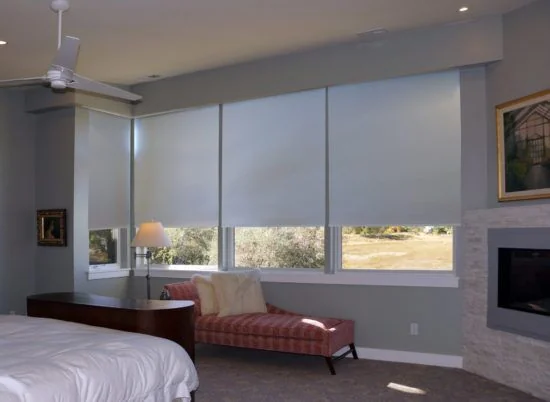
Make the decision in the room’s context.
Before approving a direction, ask what the fabric is intended to do and what it is not intended to do. Discuss nighttime use explicitly. A sample review should support the choice, with the final system, fabric and mounting conditions confirmed together.
For a home office, the best daytime arrangement may differ from a bedroom. For a shared living space, you may value the view until evening and then want greater privacy. There is no reason to force those different routines into one assumed requirement.
Evaluate Privacy from Both Sides of the Window
A daytime view can be misleading. Consider a street-facing living room used for reading after dinner: the goal may be a garden view in daylight and concealed interior activity after dark. One solar-screen layer may satisfy the first requirement while failing the second.
When reviewing a proposed fabric or sample, ask what can be seen from the relevant outside position with the room lit. A handheld sample cannot reproduce the entire installation, but it can help frame the right question. Also examine sightlines around the sides and bottom, particularly where someone can approach the window.
For a bedroom or dressing area, make privacy a required function in the brief rather than an assumed benefit of a darker color. If the solution uses two layers, decide how you will switch between them and whether each needs independent operation.
Compare the Choices
| Choice or situation | What to consider | What to check |
|---|---|---|
| Daytime glare with a view | Review a solar-screen fabric. | Do not infer nighttime privacy from its daytime appearance. |
| Privacy after dark | Review a fabric and complete installation intended for privacy. | Check side gaps and the actual sightline. |
| Daytime view plus nighttime privacy | Discuss a dual-shade or layered arrangement. | Confirm mounting room, separate operation and the additional hardware. |
Put This into Practice
- Name the rooms used after dark.
- Identify the outside viewpoints that matter.
- Ask which layer provides privacy and what gaps remain.
Product References
Consult the manufacturer’s information and confirm the exact specification for your project.